Our Foundations & Framework
At Misty Meadows Wellspring, learning is understood as a living process — a complex, adaptive, emergent system continuously forming and reforming through relationship.
Just as every organism on Earth self-assembles in response to its environment, each child shapes their own understanding through curiosity, play, and experience.
This is what we mean by learning as a living ecosystem — our role is not to “teach” children, but to cultivate and maintain the conditions for their natural intelligence to flourish, as part of each child's ongoing act of becoming.
At Wellspring, there is no fixed curriculum, and no standardised teaching or testing. Each child is seen as a whole being with their own timing, questions and pathways. Learning unfolds in cycles that are complex, adaptive, emergent and unique to each child.

From Control to Trust
Across the world, education systems built for predictability and control are showing their limits. Designed for an industrial age, they measure compliance rather than curiosity, and standardise what is most alive.
At Wellspring, we are pioneering what lies beyond mainstream education — not in opposition, but in evolution. We see learning as a dynamic ecology: a continual process of sensing, responding, and adapting.

From Standardisation to Emergence
In place of outcomes, we orient toward emergence — the unfolding of understanding that arises when children are trusted to explore, collaborate, and inquire freely.
This is not an abandonment of rigour, but a redefinition of it: rigour as attentiveness, depth, and coherence. Emergence begins when we trust life’s intelligence more than our need to control it.

Why This Matters Now
We are living through a time of profound planetary and cultural transition. Systems everywhere — ecological, social, economic, political and technological — are unravelling and re-forming. Education cannot remain untouched by this transformation.
Wellspring’s work arises from this recognition. We are cultivating coherence, presence and collaboration rather than compliance, performance, and competition.

The Human Learning Principle
“Humans continuously self-assemble understanding, identity, and capability through interaction with their living environment.”
When Cassie Janisch set out to create Misty Meadows in 2012, her vision was to create a learning environment that mimics a natural ecosystem to optimise each child’s capacity to become who they are, according their own unique blueprint.
The foundation of her thinking, which informs the way we work at Misty Meadows Wellspring, finds its roots in biomimicry, which studies the patterns that allow life on Earth to survive and thrive. Over billions of years, living systems have evolved a set of operating strategies — often called Life’s Principles — that guide how organisms grow, adapt, collaborate, and evolve.
Humans are no exception. Like all organisms, we grow, adapt, and learn through interaction with our environment.
When we look closely at how children learn, how humans build understanding, identity and capability, we see the same patterns at work. Children build understanding gradually from the bottom up. They assemble knowledge for themselves through exploration and experience. They learn through relationships, through diversity of ideas and perspectives, and through continual adaptation to their surroundings. Learning is a self-organising process that unfolds over the course of a life, through curiosity, experimentation, relationship, and feedback from the world around us.
Organic Operating Principles
Every human child is engaged in a natural and organic process of ongoing self-assembly through interacting with their environment. Our operating principles are derived from this organising principle.
Our operating principles help to keep us oriented while allowing emergence to shape the way forward. This is both the freedom and the challenge of the Misty Meadows Wellspring learning ecosystem.
1. Learning is an organic process of self-assembly.
Each child is engaged in an ongoing, natural process of becoming through interaction with their environment, using the tools of their conscious awareness, their body (their senses, their nervous system), their curiosity, their intellect, other people and the tools and resources of their culture. Our role is to protect and nourish the conditions in which this process can unfold optimally.
2. Each child is the central agent in their own learning process.
We trust children to learn what they need to know in order to thrive. Each child shapes their own learning path, which is supported – not authored – by adults. Education, therefore, is personalised rather than standardised.
3. We support children to know themselves and trust themselves.
A child’s primary work is to become fully themselves. We support children to experience themselves as whole, capable, and sufficient – developing confidence, competence and presence as the basis for self-mastery and responsible participation in the world.
4. We attend to the whole child.
Children are physical, emotional, social, intellectual, and inner (spiritual/energetic) beings. Learning attends to all of these dimensions, not only cognition. Observation and reflection consider how children are knowing, thinking, doing, being, and connecting.
5. Development unfolds through individual rhythms and timing
Human development does not follow a single uniform timeline or trajectory. Children reach understanding and capabilities at different times and in different ways. We respect and protect the natural rhythms through which development unfolds, adapting and responding based on what we observe in real time.
6. Learning is relational and collaborative.
Humans are social beings who learn most effectively from and with each other. Mixed-age interaction, conversation, shared problem-solving, and peer learning are central to how understanding develops.
7. Adults act as mentors, facilitators, and co-learners.
Adults follow the child’s lead, offering support, perspective, resources, and reflection without assuming authority over learning. Expertise is shared when relevant to the context and to interest shown; curiosity is modelled continuously.
8. Curiosity, enthusiasm, and meaningful challenge drive learning.
Enthusiasm is like fertiliser for the brain, and learning deepens when it is chosen for reasons that are personal to each child. We work with children’s interests and questions, while also supporting them to stretch, persevere, make growth-aligned, informed choices about what to continue with and what to release, and engage with meaningful difficulty as part of growth.
9. Our physical environment is a primary teacher.
Our learning environments are beautiful, flexible and resource-rich, designed for exploration, in which children can follow their natural drive to understand themselves and the world around them through interaction with their environment. Our environments and resources include unlimited access to nature, materials, technology, and human expertise. Children are free to interact with, shape and care for their environment as part of their learning.
10. Life itself is the curriculum.
True learning does not happen in silos. True learning is not abstract and separate from “real life” but a deeply relevant – and in fact unavoidable – aspect of life. Everything — experiences, relationships, projects, challenges, tools, and questions — is a potential learning resource, or curriculum. Therefore, we support the discovery and mastery of abstract concepts and theories in whatever ways they are embedded in children’s lives. Academic study is facilitated when it is chosen for a purpose that matters to the child.
11. Learning is understood through qualitative reflection rather than measurement.
We value intrinsic motivation and self-assessment. Learning is documented through observation, dialogue, and creative expression. Families receive reflective narratives and visual documentation of each child’s development in key areas – knowing, thinking, doing, being and connecting.
12. Responsibility, freedom, and care are learned together.
Children are supported to take responsibility for their actions, relationships, and choices. We trust children to explore their world, including real risk, with appropriate care and shared accountability. Conflict is approached as an opportunity for learning, understanding, self-reflection and repair.
13. Governance exists to serve the learning ecosystem.
Administration, policies, and structures exist only to support emergence. We favour responsiveness over rigidity or complex control, and are committed to continual adaptation based on lived experience.
14. We are embedded in and accountable to our community.
Children are part of a wider social and ecological world. We aim to be accessible to our whole community, regardless of race, gender, age or financial situation. At the same time, the health of the learning environment depends on the care and participation of everyone within it. Families and community members are invited to participate meaningfully in the life of the ecosystem, and share responsibility for maintaining the conditions in which learning and development can flourish..
15. Wellspring is part of a wider learning ecology.
We share what we learn and remain in dialogue with broader educational, social, and ecological systems, and with those who are doing trans-disciplinary work in imagining alternative frameworks, locally and internationally. This work is not isolated; it is part of a living learning web.

Spaces & Experiences
The Human Learning Principle is not something that switches off - humans are following this pattern all the time, in all environments. When we orient to it at the level of ontology (a way of being), instead of designing an environment that attempts to control learning outcomes – an impossible task, by definition – we can design conditions that work with the natural intelligence of living systems.
The environment then is a rich, ever-evolving ecosystem of people, materials, ideas, and experiences within which children can explore, question, experiment, as they go about constructing their own understanding, identities and capabilities.
At Wellspring, we work with this deliberately, but the fact is that this underlying pattern is not unique to Wellspring – it unfolds wherever humans are, and any environment and conditions can be embraced for the emergence of optimal self-assembly.

Environments designed for discovery
All our spaces are designed with exploration in mind, and a wide range of resources are always available to support and extend inquiries that the children are pursuing. Not least, the environment of the farm itself is an endless source of inspiration and activity, both planned (such as regular hikes) and spontaneous (such as weather-inspired boat-building days at the dam).
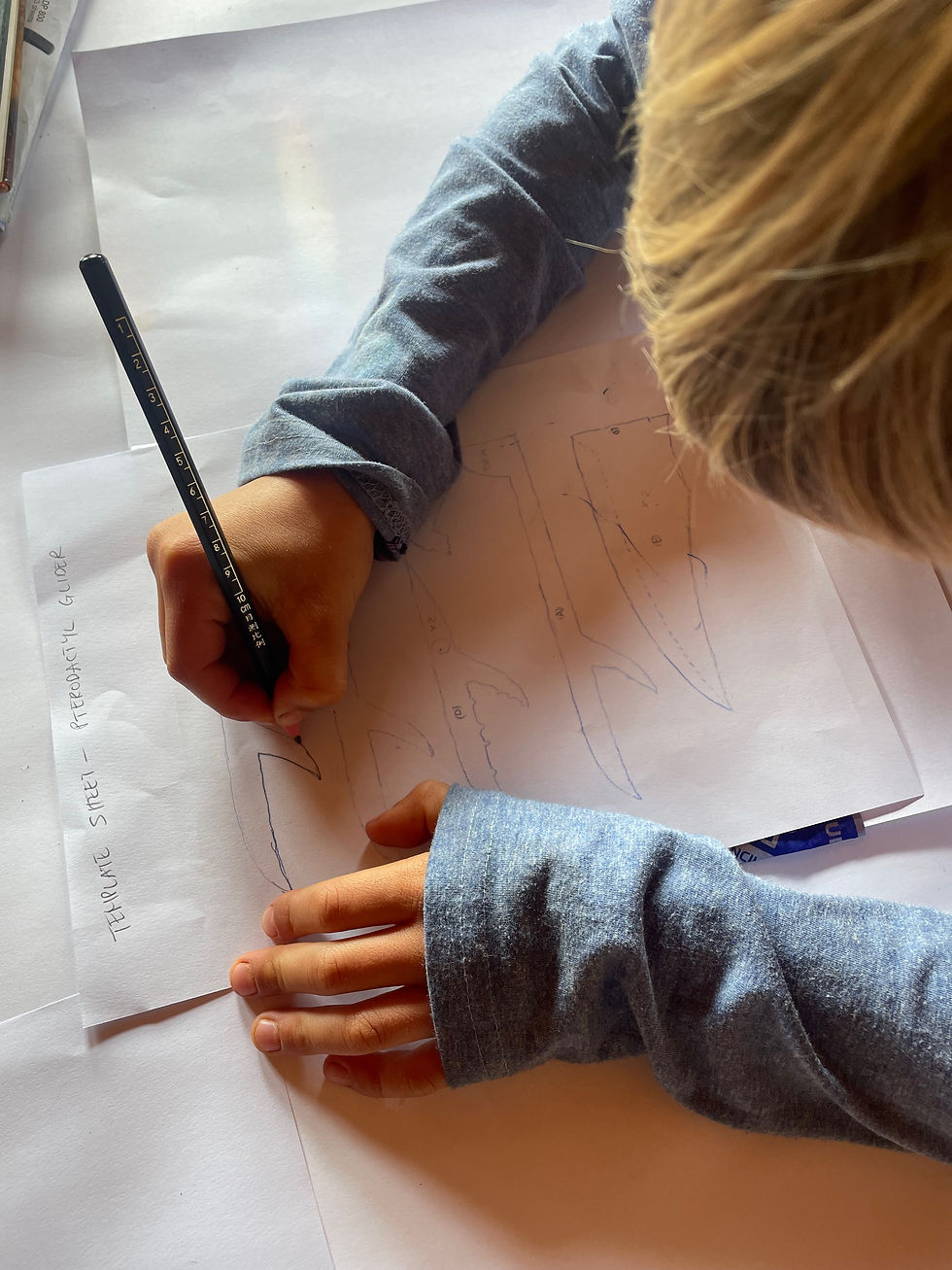
Within this living landscape, we have created a built environment designed to further enable exploration and creativity. These include a kitchen, a makerspace and sewing room, music and reading spaces, audio-visual spaces, gaming spaces, playgrounds, social spaces, and various large and small classroom spaces, to pursue group and individual interests alone or with a facilitator.

Phases of exploration
At Misty Meadows Wellspring, children of all ages learn and live alongside one another in a shared, evolving landscape of discovery. The ecosystem is multi-age by design, where younger and older children interact fluidly throughout the day, learning through observation, imitation, and collaboration. Within this continuous flow, certain constellations naturally form around shared rhythms, needs, curiosities and ways of engaging with the world.
These phases emerge organically from the characteristics and affordances of each developmental stage: the sensory wonder and play of early childhood, the mapping and pattern-making of middle childhood, the imaginative world-building of pre-adolescence, and the growing self-authorship of the teen years.
Kindergarten
(2-5 years)
Mapping Phase
(6-9 years)
World-Building Phase
(9 - 13 years)
Self-Mastery Phase
(14+ years)
Curated programmes
Misty Meadows Wellspring’s learning field is always evolving. Alongside our daily ecosystem activity, we offer a growing range of workshops, mentorships, and collaborative programmes — each designed to share the spirit of discovery that shapes life and learning here, as well as in response to a growing need in the wider community for considered integrative learning experiences.

Stepping into a new paradigm
Choosing self-assembled education is not just a change in schooling; it is a change in how we understand learning, childhood, and even relationship itself. We are invited to unlearn, to re-examine what we thought we knew, and to step into new ways of seeing and being together.
This shift is not linear. The potential unlocked is extraordinary. There are moments of ease and joy, moments of doubt and fear, moments of wonder and discovery. At its heart, it asks for courage, patience, and a willingness to hold both light and shadow.
We have put together a set of signposts and resources for those on this journey with us, that may help orient you as you find your own way.
COMING SOON